A Load Balancer Is Not the Same as Internet Bonding
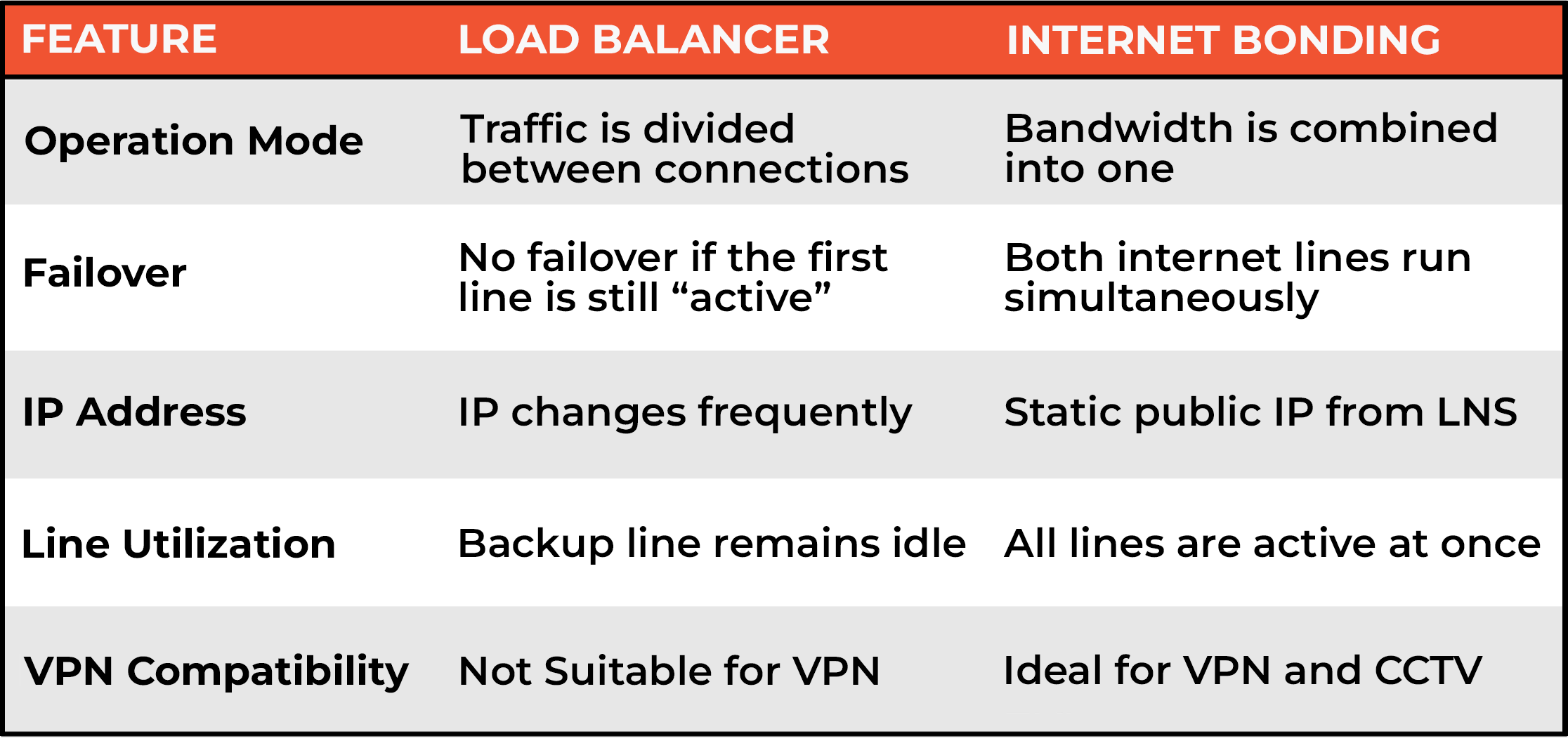
Many companies still consider a load balancer the best multi-ISP solution. In reality, however, a load balancer only splits traffic. It doesn’t actually combine internet lines.
And this difference is absolutely critical, especially if your business needs:
- IPSec VPN tunneling
- Internet stability for real-time connections
- Cost efficiency
Real Case: KTU Logistic's Load Balancer Inefficiency
KTU Logistic, a logistics company, initially used a load balancer for two internet lines from two different ISPs. But they soon discovered a harsh reality:
1. Line One Was Unstable
Although it never went completely dead, the connection was poor enough to disrupt stability. Yet because its status was still “active,” the load balancer refused to switch over to the second line.
2. IPSec VPN Failed to Connect
Because of shifting public IPs and a fluctuating internet connection, the VPN tunnel kept dropping. As a result, their CCTV system across all locations was disrupted. Their online systems also frequently failed to log in.
3. The Second Line Went to Waste
The second line sat idle because the load balancer “waited” for the first line to fail completely. Meanwhile, both ISPs were being paid for in full.
The Solution: LNS 360 Hybrid Internet Bonding
After switching to the LNS 360 Hybrid Internet solution, KTU Logistic saw a massive improvement:
1. Two lines combined, not split
All bandwidth merges together into one unified pipeline, like two rivers flowing into a single dam.
2. The second line works together with the first
No need to wait for a total ISP outage. Our system ensures data traffic flows across both internet connections simultaneously.
3. Stable VPN with a Static Public IP
With LNS, the IPSec VPN tunnel runs smoothly without dropping, completely unaffected by dynamic IP changes from individual ISPs.
In fact, KTU Logistic is now free from ISP contracts and lock-in restrictions, allowing them to switch providers anytime without network reconfiguration.
Who Should Replace Their Load Balancer with Internet Bonding?
Not just logistics companies any enterprise in Malaysia that requires internet capable of delivering:
 Stability for real-time connections
- Seamless IPSec VPN Tunneling
- Multi-ISP cost efficiency
We help you achieve Zero Internet Downtime. From banking and manufacturing to mining and plantations, let LNS migrate your infrastructure from a legacy load balancer to a resilient internet bonding architecture.
If you’re looking to improve IT OPEX efficiency, now is the time to ask: is your current multi-ISP setup truly cost-effective? We’re ready to help.


 Stability for